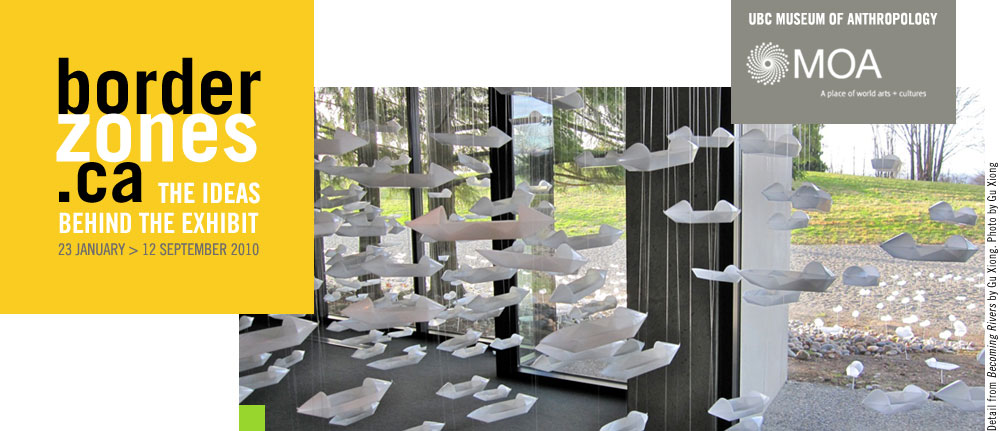
The flotilla of toy-sized white sampans starts outside the museum, in sight of the Pacific Ocean. The fleet snakes along the museum grounds, across a pond of dry gravel, and then floats, suspended in air, through two galleries and a connecting hall. The small white plastic boats, two thousand in all, are part of Becoming Rivers, an installation by Gu Xiong at an exhibit inaugurating the Museum of Anthropology’s Audain Gallery.
Called Border Zones: New Art Across Cultures, the wider exhibit features twelve international artists and is part of Vancouver’s 2010 Cultural Olympiad. The theme – borders – raises questions about migration, identity and transformation.
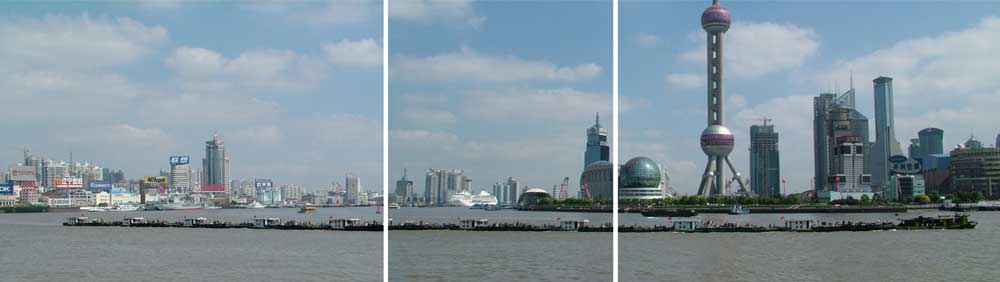
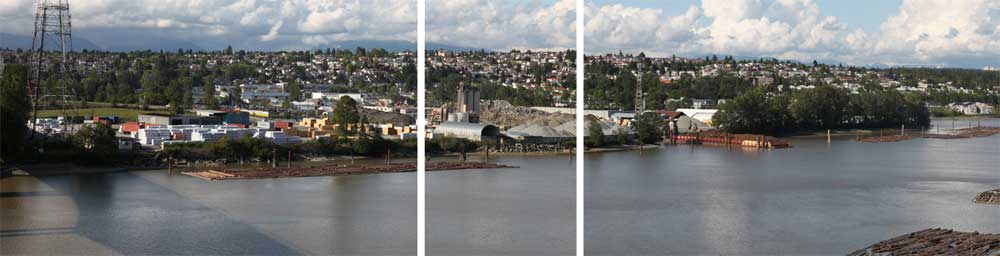
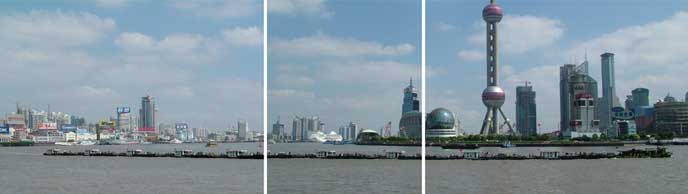
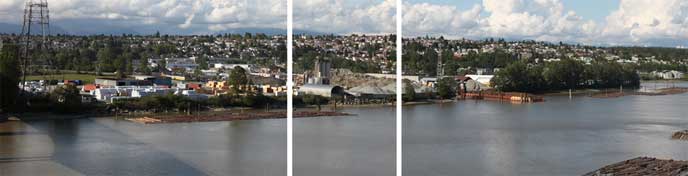
“I’m trying to show the river, a river of migration, a river of change,” says Gu, 56. “This work carries forward the idea of migrations by bringing the Yangtze and Fraser rivers together across the Pacific Ocean. They signify the coming together of peoples and cultures.”
Indeed for more than thirty years our paths would intersect again and again. As the first Canadian to study in China, I experienced the Chinese revolution in tandem with him. We would not actually meet until years later, at a panel discussion on the Cultural Revolution at the Power Plant Contemporary Art Gallery in Toronto.
Artists often cleave to their roots. Gu never intended to leave
his birthplace of Chongqing, on the banks of the Yangtze. Becoming
Rivers, the Vancouver-based artist says, “expresses my feeling of
living between two cultures. Normally there is a bridge [across
a river]. But in my experience, I had to jump into the water. I
had to swim a long time before I could reach the other shore.”
From his earliest years, exclusion, exile and loss were his fate.
In 1957, when Gu was four years old, his father was labeled a political
“rightist” and sentenced to an indefinite term of hard labor. The
family was consequently classified as “black,” meaning reactionary
and bad (as opposed to revolutionary “red” and good.)
Gu and his siblings, an older sister and a younger brother, would not see their father again for years. “Our mother couldn’t tell us what happened. She only said, ‘He works far away from home and cannot come back.’”
The family’s fate worsened in 1966, when Mao launched the decade-long upheaval known as the Great Proletarian Cultural Revolution. Like millions of Chinese teenagers, Gu was sent a remote village to till the fields. At night, he would draw by the light of a kerosene lamp, filling 24 sketchbooks in four years. To have that much energy left for art took immense willpower. I know because in 1972, I was toiling in the fields, voluntarily, at the same time as Gu. At night I was so exhausted my arms would tremble and I could barely lift my chopsticks to my lips.
The death of Mao in 1976 enabled Gu to enter the prestigious Sichuan Fine Arts Institute. He threw himself into the artistic ferment engulfing China. In 1989, he took part in the first avant-garde show at the National Art Gallery of China. As Beijing correspondent for the Globe and Mail, I covered that landmark exhibition, which included China’s first nude paintings. Gu’s provocative installation, Enclosures, involved drawing a chain-link fence over his clothing, face and hands. The Communist authorities were so jittery they shut the exhibition down several times – and then for good after an artist fired a pistol with live ammunition as part of her performance art.
A few months later, the pro-democracy demonstrations began at Tiananmen Square. Gu’s father, who had survived the labor camps, urged him to stay away. Gu refused to listen. “I said, ‘This is not the 1950s. This is the 1980s. We will win.’”
The artist arrived in Beijing as the army tanks rolled into Tiananmen Square. A distraught friend who met him at the train station described the casualties. Gu declared that he wanted to go to the square anyway. His friend said that was impossible. “I said, ‘I would like to try.’”
That night I, too, was at Tiananmen Square, reporting on the massacre. Gu and I separately witnessed the tanks crushing makeshift barricades formed of bicycles and concrete lane dividers.
“It was like a war,” Gu recalls. “I promised myself that I would do an art installation to commemorate the barricade of bicycles.”
He kept his promise. Two months later, he fled China with his family
for Canada, where one of his first works was an installation of
a tangled mass of four hundred bicycles. The National Gallery of
Canada bought Gu's mural of the piece.
His newest installation, at the MOA, is inspired by the origami
boats Chinese children float on rivers. “They put their hopes and
wishes into these boats. A river is in some ways a metaphor for
my life. My inspiration comes from the river, my life experience
here on the Fraser River.”
Jan Wong is a Toronto-based journalist and author. Her most recent
book is Beijing Confidential, a Tale of Comrades Lost and Found
(2007).
Photo #1, Yangtze River, by Gu Xiong
Photo #2, Fraser River, by Gu Xiong
|