|
Most often the challenge set by the artist was intended
to move the viewer beyond the beauty or perceived chaos of their
piece. There was certainly the intention of moving the viewer from
the obvious first impression or the surface value of the work. Look
deeper, look with your mind and heart, was the most frequent enjoinder.
I found following the thread of questions brought cohesion and linkage
to an exhibit that could have otherwise been difficult to access.
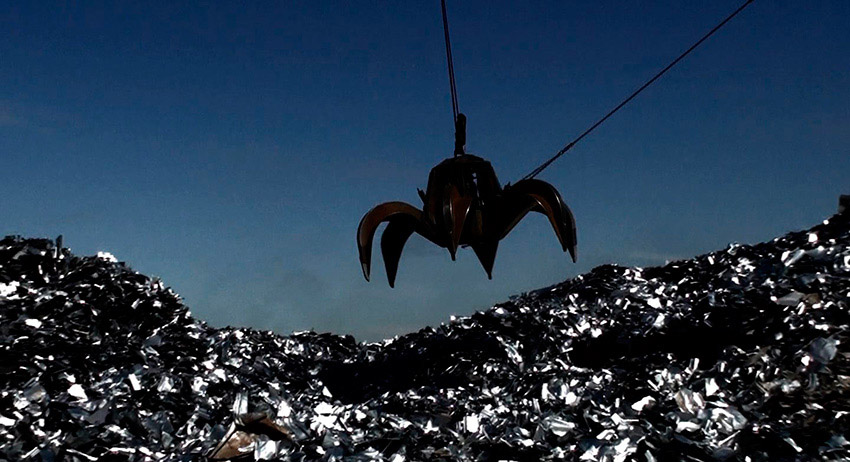
This is not a relaxing exhibit. From the aural assault of roaring
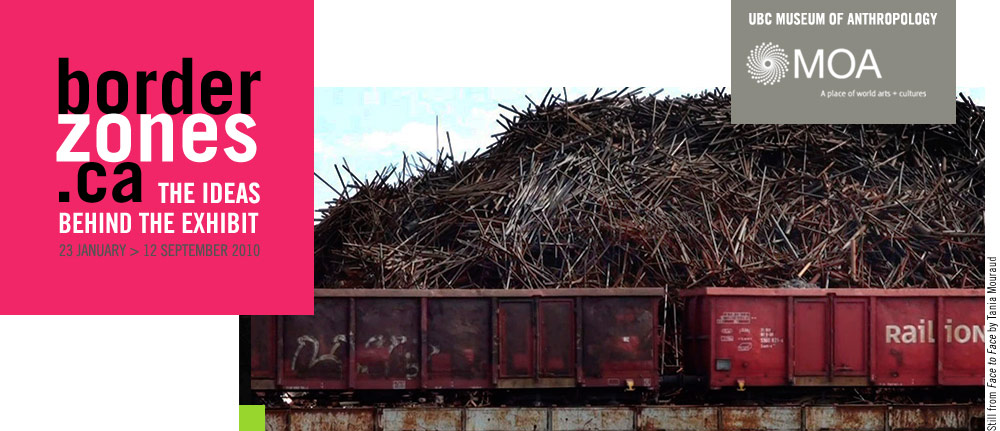
crane jaws heaving metal in Tania Mouraud’s Face to Face
installation to the visual summons of hundreds of identical “postboxes,”
this is no smooth ride. Instead, rather like a bumper car you bang
up against images, sounds and materials. And somehow there is pleasure
in that agitation. It is satisfying to conceptually engage on many
levels.
Understanding comes in gradual layers as you move through the exhibit.
Each piece says what it wants and needs to say about borders or
lack of them or confluence of them. So it is fair to say that there
is a clear and accessible continuity of ideas here. What wasn’t
so clear beyond the practical need to isolate Mouraud’s installation
was the placement of the pieces. Why this there?
There were audible sighs from many as they encountered Gu Xiong’s
Becoming Rivers ethereal, transparent, lightly floating, plastic
boats. Designed as it was to draw us in and on, it was certainly
the most successful setting of a piece. The absence of easily understandable
borders between the pieces may indeed have been a studied approach—another
way of asking, what needs to be separated and why?
Some of the works, such as John Wynne’s Anspayaxw
sound installation of photography panels with hidden speakers, create
their own rectangular space. Crisp, clear photos showing men and
women in their home settings telling stories or singing in their
native tongue, or the sweet sound of wind whistling, created a deeply
humanistic display that had the immediacy of impact that some of
the other displays in the gallery lacked. The question of borders,
in this case language and its ability to create or negate them,
was apparent and accessible.
|
 |