 |
Face to Face
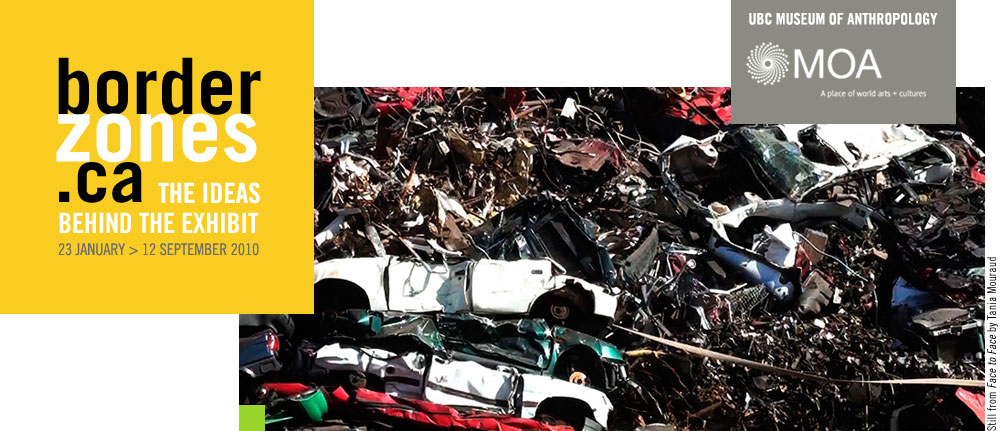
We immediately find ourselves at the very heart of the matter: freight
trains, symbolizing death, slowly pass before our eyes, assaulting our
ears with a symptomatic grinding and grating. Then the cranes go to work,
throwing around merchandise of all sorts and heaping up piles of metal
waste. Amongst all this debris we sometimes are able to identify car wrecks,
washing machines, a desk—things from our everyday life. All this
is taking place in a sort of exaggerated dimension that is created by
the frenetic activity of the machinery. The video ends with a kind of
gigantic claw shape, reminiscent of a spider, which comes down from the
sky and sinks its teeth into a mass of gleaming, fragmented material.
And what if the rhythm of the machines were upset?
The spectator is overcome by a vague distress, the kind of fascinated
anxiety that children can experience when listening to a Grimm's fairy
tale. A feeling of immense fragility maintained by the soundtrack arises
from this display of destructive power with which we normally have very
little contact, because it usually takes place somewhere on the edge of
the megalopolis.
By rendering palpable a very fundamental anxiety about the future of
our species and the future of the planet, this installation is asking
questions about the present, questions that the spectator must confront.
Are the ethical foundations of our capitalist societies strong enough
to avoid disaster?
- Tania Mouraud
(English translation by Tatiana Charters)
|
 |
FEATURE: Face
to Face by Pierre Petit (English) |
 |
|
FEATURE: Face
à Face par Pierre Petit (En français) |
|
|






























 Artist's
Statement (English)
Artist's
Statement (English)




